+604 332 2335
sales@professional-tools.com
+604 332 2335
sales@professional-tools.com


At Professional Tools & Dies Sdn Bhd, CNC machining is more than a standalone manufacturing process. It is a critical capability that supports tooling fabrication, precision component manufacturing, production automation and contract manufacturing projects across multiple industries.
Since 1990, we have supported multinational customers in automotive, electronics, semiconductor, medical devices and industrial equipment manufacturing through precision machining solutions integrated with mould fabrication, sheet metal stamping, plastic injection moulding and box-build assembly operations.
Whether producing prototype components, production parts, tooling inserts or custom fixtures, our CNC machining processes are designed to deliver repeatable quality and dimensional consistency.
We provides precision CNC machining and turning services for both prototype and production requirements.
Core Deliverables
Unlike conventional machining methods, CNC-controlled manufacturing enables repeatable production of complex geometries with consistent dimensional accuracy across multiple production runs.
CNC machining is widely used when dimensional accuracy, repeatability and material flexibility are critical requirements.
Compared with forming-based manufacturing processes, CNC machining allows engineers to produce complex features directly from solid material while maintaining tight control over critical dimensions.
Typical applications include:
For manufacturers introducing new products, CNC machining also supports faster design validation before committing to production tooling.
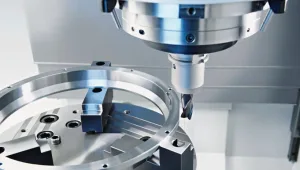
CNC milling removes material using rotating cutting tools while the workpiece remains fixed.
Our milling capabilities support:
Applications range from tooling inserts and machine components to custom manufacturing fixtures.
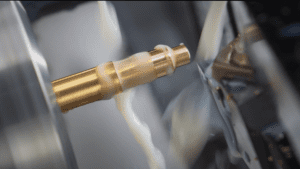
CNC turning produces cylindrical and rotationally symmetrical components by rotating the workpiece while stationary cutting tools perform machining operations.
Capabilities include:
CNC turning is commonly used for shafts, spacers, bushings, sleeves and other rotational components.
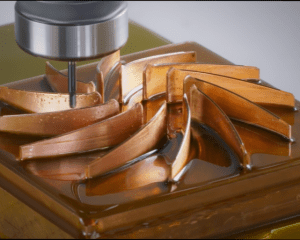
Multi-axis machining enables more complex geometries to be produced with fewer setups.
Benefits include:
This capability is particularly valuable for tooling components and complex engineering parts.
High-Speed Machining (HSM) uses optimized cutting parameters and higher spindle speeds to improve machining efficiency and surface quality. It is commonly applied to tooling components, mould inserts, and precision engineering parts.
Benefits include:
We support a wide range of precision-machined components including:
Because we operate as a vertically integrated manufacturer, machined parts can also be incorporated into larger assemblies and contract manufacturing projects.
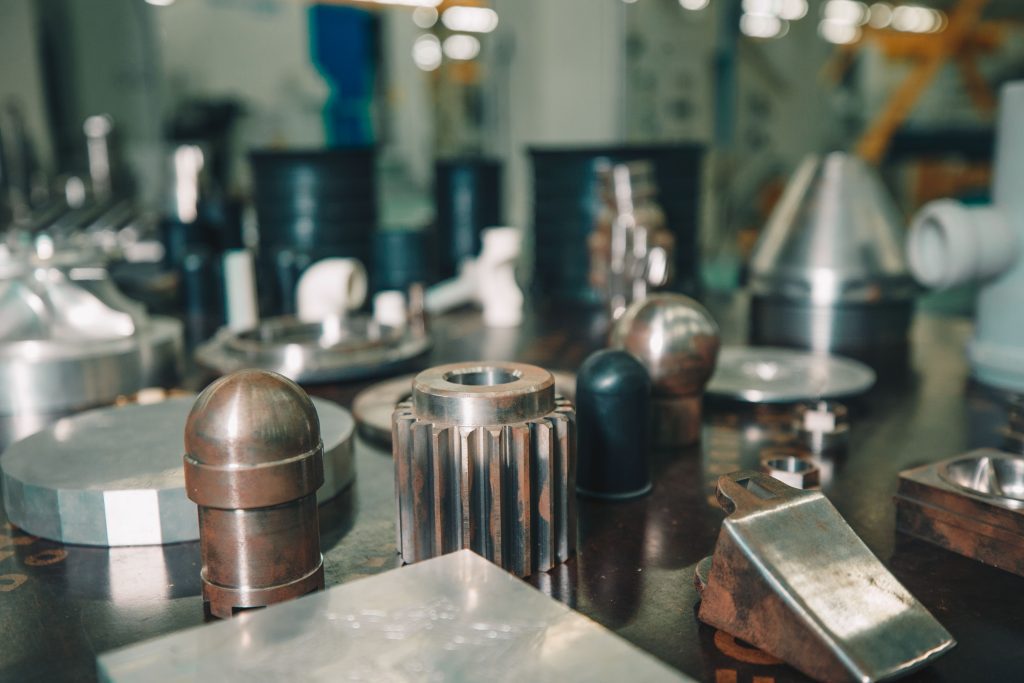
Aluminium offers a combination of low weight, corrosion resistance and machinability, making it suitable for electronics housings, automation equipment and industrial machine components.
Stainless steel is commonly selected for applications requiring corrosion resistance, durability and mechanical strength.
Typical applications include medical devices, industrial equipment and precision engineering components.
Mild steel is widely used for structural and industrial components where strength and cost-effectiveness are important considerations.
Engineering plastics provide lightweight solutions with excellent electrical insulation and chemical resistance properties.
Applications include semiconductor, electronics and automation equipment.
Brass and copper are frequently used for electrical, thermal and precision engineering applications where conductivity and machinability are required.
One of PTD’s key advantages is the integration of CNC machining with other manufacturing processes.
Machined components support:
This integrated manufacturing model reduces coordination complexity and allows engineering teams to optimise components for downstream production processes.


CNC machining is used to manufacture a wide range of components, including housings, brackets, shafts, spacers, bushings, tooling components, fixture parts, and custom-engineered components. It is suitable for parts that require accurate dimensions, repeatability, and consistent quality.
A quotation typically requires part drawings or CAD files, material specifications, quantities, tolerance requirements, surface finish requirements, and any secondary processes that may be needed. Complete technical information helps ensure the correct machining process and manufacturing approach are selected.
Yes. CNC machining is commonly used for prototype development, low-volume production, and ongoing production requirements. It allows design validation before production tooling is built and can also support production components that require precision machining.
CNC machining is used to manufacture mould components, die sections, tooling inserts, fixture elements, and other precision tooling parts. Accurate machining helps ensure tooling components fit correctly and perform consistently throughout production.
CNC machining is widely used in semiconductor, electronics, automotive, medical device, industrial equipment, and precision engineering industries. It is commonly applied where dimensional accuracy, repeatability, and reliable component performance are required.
When CNC machining is integrated with tooling fabrication, injection moulding, sheet metal stamping, and assembly services, engineering and production activities can be coordinated under one supplier. This reduces communication delays, simplifies project management, and helps streamline the transition from development to production.