+604 332 2335
sales@professional-tools.com
+604 332 2335
sales@professional-tools.com

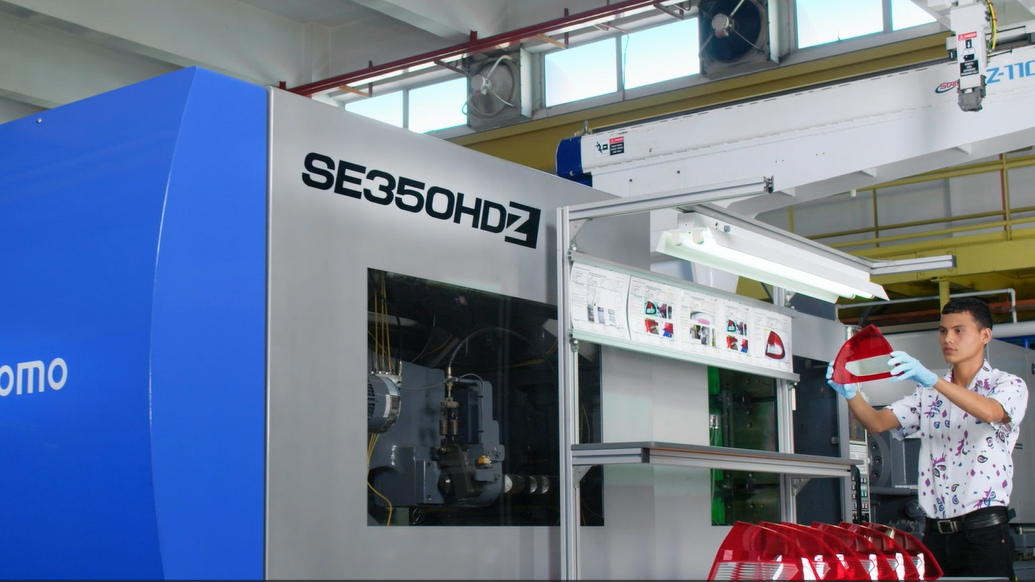
In Malaysia’s evolving manufacturing sector, the demand for components that balance strength, durability, and weight reduction continues to grow. From automotive structures to industrial equipment housings, manufacturers are seeking innovative molding techniques that deliver robust performance while reducing material use.
At Professional Tools, our expertise in Structural Foam Injection Malaysia empowers clients to achieve precisely that, combining lightweight design with high structural integrity for superior product performance and cost efficiency.
Structural foam injection molding is an advanced process that injects a polymer mixture containing a foaming agent into a mold. As the material expands, it forms a microcellular internal structure, creating a solid outer shell with a lightweight, foam-like core.
This engineered structure enhances stiffness, dimensional stability, and impact resistance while using less plastic material compared to traditional solid molding.
Unlike conventional injection molding, this technique enables the production of large, complex, and high-strength parts without the drawbacks of excessive weight or warping. The result is components that are both stronger and lighter, ideal for demanding applications across multiple industries.
The structural foam injection process provides a range of performance and production benefits that make it a preferred solution for modern manufacturers in Malaysia:
These combined benefits help manufacturers achieve cost-efficient, sustainable, and high-performance outcomes, making structural foam injection an increasingly valuable capability in Malaysia’s precision manufacturing landscape.
Structural foam injection technology is widely adopted across industries where mechanical strength, dimensional accuracy, and lightweight properties are critical. Within Malaysia, it supports key sectors including:
By integrating structural foam injection, Professional Tools helps clients optimize both part performance and production efficiency, reducing costs while maintaining consistent quality standards.
At Professional Tools, we combine advanced molding technology, precision tooling, and material expertise to deliver structural foam components that meet stringent industry requirements. Our integrated process covers:
Our in-house engineering team works closely with clients from concept through production, ensuring precision, efficiency, and repeatability in every molded component.
As industries in Malaysia continue to pursue higher productivity and sustainability, structural foam injection molding stands out as a transformative technology. Its combination of lightweight efficiency, design freedom, and durability supports innovation in both product design and process optimization.
By partnering with Professional Tools, manufacturers gain access to proven expertise, cutting-edge technology, and a commitment to delivering excellence in every molded part.
Unlock the benefits of Structural Foam Injection Malaysia with Professional Tools, your trusted partner in precision molding and advanced manufacturing solutions.
Contact our team today to discuss your project needs and discover how we can help you design stronger, lighter, and more efficient components for tomorrow’s market.
Consistency is achieved through:
This approach guarantees optimal strength and dimensional stability across all parts produced.
Yes. One of the biggest advantages of structural foam injection is its ability to mold thick or intricate components without defects such as sink marks or warping. The foamed core supports even material distribution, allowing for complex designs that remain lightweight and structurally sound.
It depends on your product size, strength requirements, material goals, and end-use conditions.
Our engineering team evaluates:
This ensures that every project uses the most effective and efficient molding approach.
While tooling investment is similar, structural foam injection often delivers a better long-term ROI through:
The result is a more economical process for medium to large production runs.
Our structural foam injection technology is widely applied in:
Each solution is custom-engineered to meet your sector’s unique performance and compliance standards.
Disclaimer Statement
We hope you found this article informative. Our content is intended for general informational purposes only and does not constitute advice or necessarily reflect the full range of services offered by Professional Tools & Dies Sdn. Bhd.
Readers are advised to consult with a qualified industry professional and contact our experts for tooling’s recommendations specific to their individual project needs. While we strive for accuracy and completeness in our blog posts, we cannot guarantee they are error-free. Professional Tools & Dies Sdn. Bhd. assumes no responsibility for any errors or omissions.