+604 332 2335
sales@professional-tools.com
+604 332 2335
sales@professional-tools.com


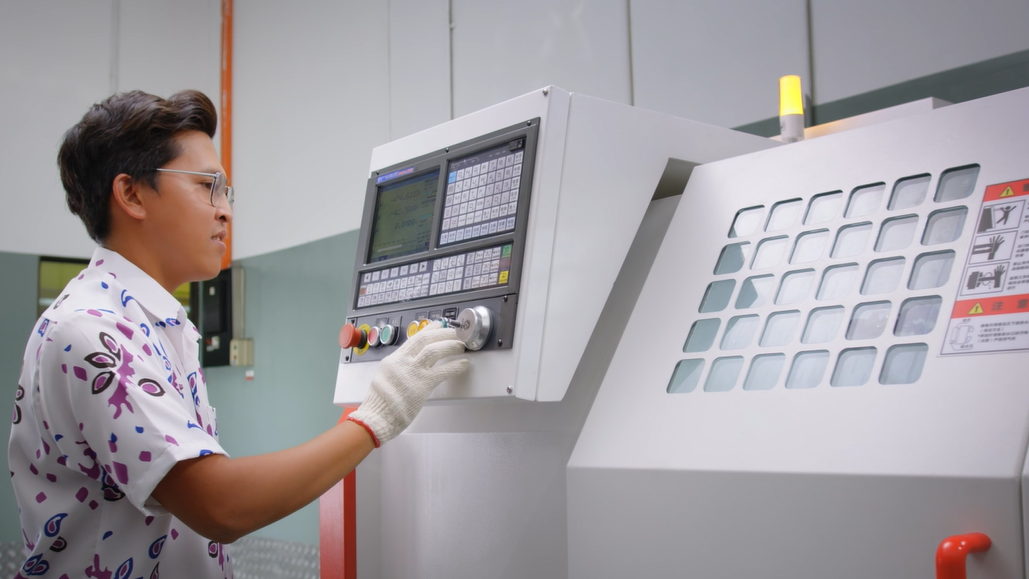
In Malaysia’s manufacturing ecosystem, CNC machining and turning are not just support processes. They are critical enablers for tooling, component production and assembly integration. For companies like Professional Tools & Dies, CNC machining supports both tooling fabrication and precision part production, which directly affect downstream processes such as stamping, injection molding and box-build assembly.
This blog focuses on achieving consistent precision and production-ready output, with emphasis on practical execution rather than general theory.
CNC machining supports multiple stages of manufacturing:
|
Stage |
Role of CNC Machining |
| Tooling fabrication | Produces moulds, dies, jigs, fixtures |
| Component manufacturing | Creates brackets, housings, shafts |
| Pre-assembly preparation | Ensures tight-fit and dimensional accuracy |
| Functional validation | Supports test fixtures and precision setups |
For vertically integrated manufacturers, CNC machining ensures that tooling and components meet dimensional and functional requirements before mass production begins.
Producing a single accurate part is manageable. Producing thousands of identical parts with consistent tolerance is where CNC machining proves its value.
Key variables that affect consistency include machine calibration, tool wear, material behaviour and environmental conditions. Even small variation across these factors can result in assembly misalignment, functional issues or increased rejection rates.
The objective is not just accuracy, but repeatability across production cycles.
Precision machining is defined by how tightly dimensions are controlled.
Typical achievable tolerances:
Tighter tolerances are often required for assembly-critical components and tooling alignment. However, tighter tolerance increases machining time, tool wear and inspection requirements.
The correct approach is to apply fit-for-function tolerance, ensuring parts meet performance requirements without unnecessary cost.
CNC turning is used for cylindrical or rotational components such as shafts, bushings and threaded connectors. It is highly efficient for producing round parts with tight control over diameter, concentricity and surface finish.
This makes it critical for components used in rotating assemblies, precision fits and mechanical interfaces.
Material choice directly affects machining performance, accuracy and cost.
|
Material |
Key Impact on Machining |
| Aluminium | Easy to machine, good surface finish |
| Stainless steel | Strong but increases tool wear |
| Mild steel | Stable and widely used |
| Engineering plastics | Lightweight but sensitive to deformation |
Material behaviour such as hardness and thermal expansion must be considered when defining cutting parameters, toolpaths and tolerance requirements.
Achieving consistent output requires more than just machine capability. Process optimisation plays a major role.
Toolpath optimisation reduces machining time and improves consistency. Stable fixturing ensures repeatable positioning across batches. Multi-axis machining reduces setup changes and improves accuracy for complex geometries.
CNC machining is also closely integrated with tooling fabrication and assembly processes, ensuring components are production-ready with minimal downstream adjustment.
Surface finish directly affects functionality, not just appearance. Rough surfaces can increase friction, while poor finishing can affect sealing and coating performance.
Surface finish is controlled through cutting parameters, tooling selection and finishing passes. For functional components, it must be defined based on performance requirements.
Dimensional drift can occur due to tool wear and is managed through monitoring and scheduled tool replacement. Warping may result from internal material stress and is controlled through machining strategy.
Assembly misfit often comes from tolerance stack-up and is avoided through proper tolerance planning and inspection.
Maintaining consistency requires structured quality control:
These ensure parts meet engineering drawings, functional requirements and assembly compatibility.
CNC machining in Malaysia supports industries such as semiconductor, electronics, automotive and industrial equipment. It is especially critical in export manufacturing, where precision and repeatability must meet international standards.
CNC machining turning Malaysia functions as precision control systems within manufacturing.
To achieve consistent, production-ready parts:
The goal is to ensure parts fit, function and perform consistently across every production cycle.
CNC machining turning is used to produce cylindrical and rotational parts such as shafts, bushings and threaded components. It is ideal for applications requiring high concentricity, precise diameter control and repeatable production.
CNC machining typically achieves ±0.1 mm for standard parts and can reach ±0.01 mm or tighter for precision applications, depending on material, machine capability and process control.
CNC machining is preferred for low-to-medium production volumes, complex geometries or tight tolerances. Stamping and molding are more suitable for high-volume production after tooling is developed.
Accuracy is affected by machine calibration, tool wear, material properties and environmental conditions. Proper process control and inspection are required to maintain consistent precision.
Parts are manufactured based on assembly tolerance requirements and verified through inspection. This ensures proper fit, alignment and function during integration into larger systems.
Disclaimer Statement
We hope you found this article informative. Our content is intended for general informational purposes only and does not constitute advice or necessarily reflect the full range of services offered by Professional Tools & Dies Sdn. Bhd.
Readers are advised to consult with a qualified industry professional and contact our experts for tooling’s recommendations specific to their individual project needs. While we strive for accuracy and completeness in our blog posts, we cannot guarantee they are error-free. Professional Tools & Dies Sdn. Bhd. assumes no responsibility for any errors or omissions.