+604 332 2335
sales@professional-tools.com
+604 332 2335
sales@professional-tools.com


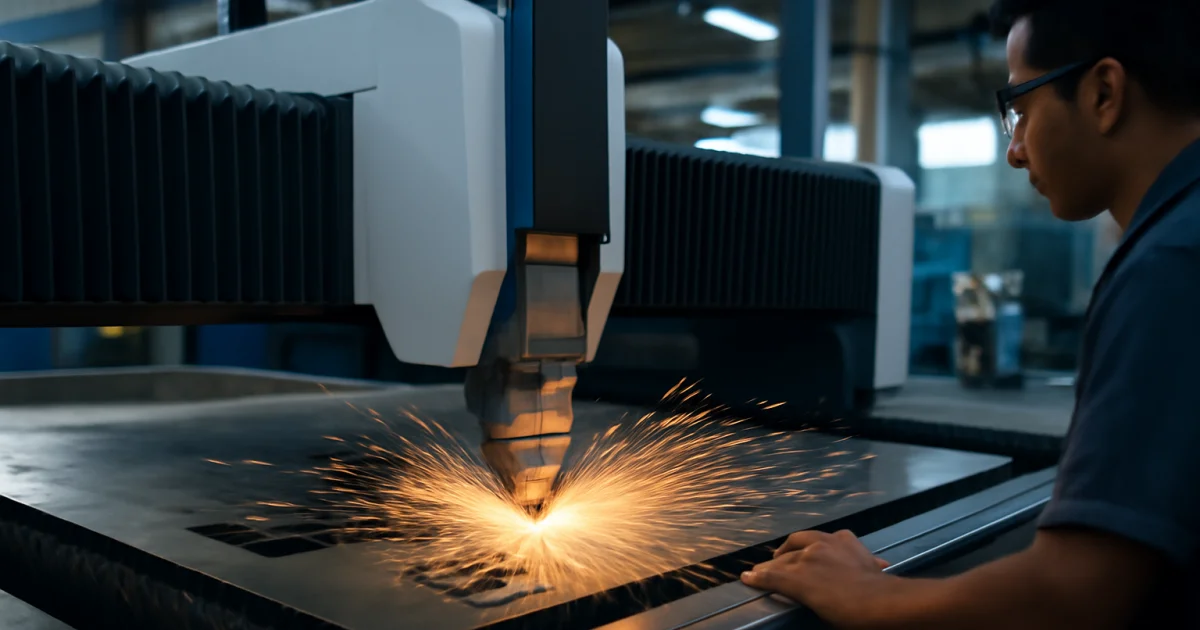
The manufacturing landscape in Malaysia is evolving rapidly, with fibre laser cutting emerging as one of the most significant trends defining the future of advanced metal fabrication. As industries such as electronics, automotive, medical device manufacturing, and industrial machinery shift toward higher precision and more complex component requirements, fibre laser cutting has become an essential tool for companies seeking efficiency, accuracy, and scalability.
Fibre laser cutting is a modern fabrication process that uses highly focused laser beams, delivered through fibre optics, to cut and engrave metal sheets with exceptional accuracy. Unlike traditional CO2 lasers or mechanical cutting, fibre lasers offer faster processing, greater energy efficiency, and the ability to handle a wider range of materials and thicknesses. This technology has become a game-changer for Malaysian manufacturers in sectors such as sheet metal fabrication, precision engineering, and contract manufacturing.
Key advantages that are fueling adoption include:
Several macro and industry-specific factors are contributing to the rapid expansion of fibre laser cutting services across Malaysia:
As a result, more Malaysian manufacturers are investing in new fibre laser machinery and integrating these capabilities into their contract manufacturing and assembly services. This trend is especially pronounced among firms serving multinational corporations (MNCs) and customers in the semiconductor, E&E, and automotive spaces.
The shift toward miniaturized, lightweight, and complex products is putting pressure on manufacturers to deliver parts with consistently tight tolerances and flawless finishes. Fibre laser cutting is uniquely positioned to address these challenges:
Manufacturers that invest in fibre laser technology often complement it with other services, such as sheet metal fabrication, plastic injection molding, and specialized tooling. This vertical integration enables them to handle complex projects for industries that cannot compromise on precision or reliability.
Fibre laser cutting is widely adopted across a spectrum of Malaysian industries:
These industries benefit from the ability to quickly move from prototype to production, adjust designs with minimal downtime, and meet global quality standards.
Companies such as Professional Tools & Dies Sdn. Bhd. leverage fibre laser cutting to deliver reliable, repeatable, and high-precision results to multinational and local clients alike. Their integrated approach, combining laser cutting with CNC machining, stamping, and assembly, allows manufacturers to source a complete solution for even the most demanding projects.
For a deeper look at how fibre laser technology is shaping precision sheet metal fabrication in Malaysia, read this guide on advancing precision in sheet metal fabrication.
Looking ahead, fibre laser cutting is set to play an even greater role in Malaysia’s advanced manufacturing sector. Key trends shaping the future include:
As Industry 4.0 principles become more widespread, the ability to offer precision, speed, and digital integration will distinguish leaders in the Malaysian fabrication space. Fibre laser cutting is a foundational technology enabling this shift.
Malaysia’s fibre laser cutting industry is experiencing robust growth, driven by the increasing need for high-precision, efficient, and scalable manufacturing solutions. As companies across electronics, automotive, medical, and industrial sectors look for partners who can deliver on quality and flexibility, fibre laser technology is helping leading manufacturers set new standards for performance and reliability.
By investing in advanced fibre laser cutting, Malaysian manufacturers are not just meeting today’s demands—they are positioning themselves at the forefront of global supply chains that value innovation and precision. For businesses seeking a competitive edge in metal fabrication and contract manufacturing, fibre laser cutting represents both an opportunity and a strategic necessity.
Fibre laser cutting uses focused laser beams to deliver precise, high-speed cuts with minimal heat-affected zones. It is faster, more energy-efficient, and produces cleaner edges compared to methods such as mechanical cutting or CO2 lasers, making it ideal for industries requiring tight tolerances and repeatability.
Industries such as electronics, automotive, semiconductor equipment, medical device manufacturing, and industrial machinery benefit most. These sectors require complex, high-precision components and fast production cycles, which fibre laser cutting delivers efficiently.
Fibre laser cutting can be combined with other fabrication services like CNC machining, metal stamping, and assembly to offer a one-stop solution. This integration streamlines production, reduces lead times, and ensures a consistent quality standard for complex projects.
Yes, fibre laser cutting is highly flexible and can switch quickly between jobs, making it suitable for rapid prototyping as well as high-volume production. This adaptability allows manufacturers to meet diverse client needs efficiently.
Look for providers with advanced equipment, experience in your industry, integrated manufacturing capabilities (such as tooling, machining, and assembly), and a proven focus on quality and efficiency. Companies like Professional Tools & Dies Sdn. Bhd. offer vertically integrated solutions and extensive expertise.
Ready to elevate your production with advanced fibre laser cutting and integrated fabrication solutions? Professional Tools & Dies Sdn. Bhd. combines over three decades of expertise with modern technology to deliver precision, speed, and quality across every project. From sheet metal fabrication and plastic injection molding to complete contract manufacturing, we help you meet the demands of today’s competitive industries. Partner with us for reliable results and a seamless production journey.