+604 332 2335
sales@professional-tools.com
+604 332 2335
sales@professional-tools.com

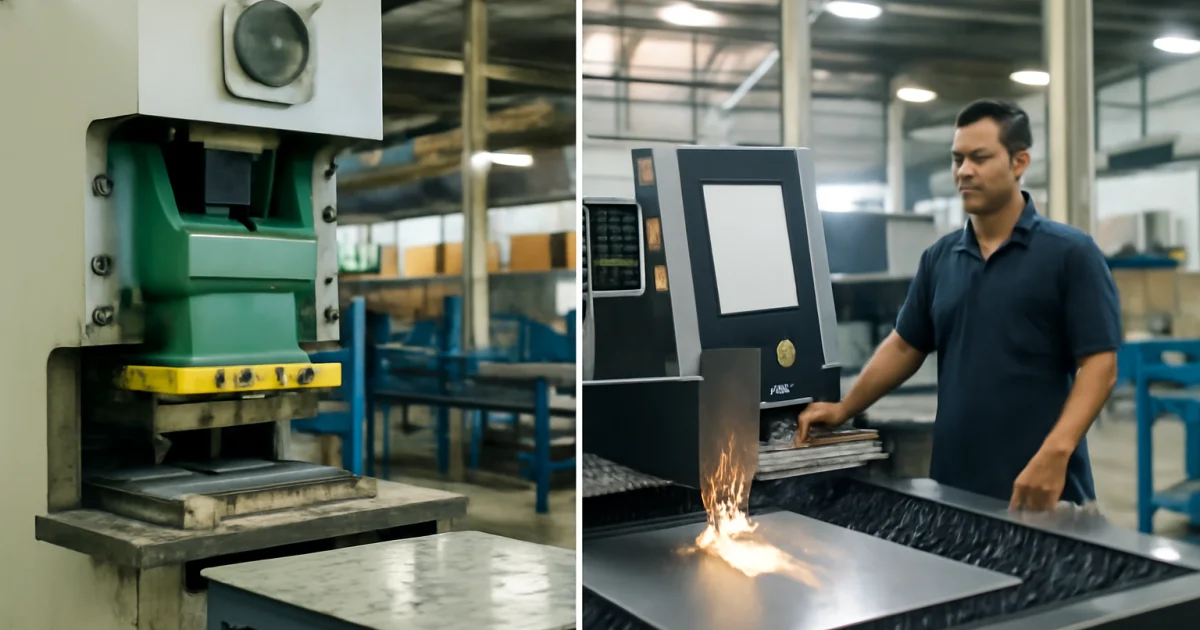
In Malaysia’s fast-evolving manufacturing landscape, choosing the right fabrication method is vital for achieving quality, efficiency, and cost-effectiveness. As product designs become more complex and performance requirements more demanding, design engineers, product managers, and buyers often face the question: Should we choose sheet metal stamping, or another fabrication process like laser cutting, CNC machining, or injection molding? This article provides a practical Malaysian perspective, comparing sheet metal stamping with other popular fabrication methods to help you select the right approach for your project. For readers comparing options, Sheet Metal Stamping Malaysia is the main topic this guide explains.
Sheet metal stamping is a high-speed manufacturing process that uses dies and presses to form flat metal sheets into specific shapes. In Malaysia, sheet metal stamping is widely adopted across industries such as automotive, electronics, telecommunications, and industrial machinery. The process is ideal for producing large volumes of parts with consistent dimensions and precise repeatability.
Key advantages include:
However, the initial tooling cost and lead time can be significant, making stamping most economical for medium to high-volume production.
Several other fabrication techniques are popular in Malaysia, each offering unique strengths. Common alternatives to sheet metal stamping include:
Each method has its place, and the best choice depends on part geometry, material, volume, cost, and application requirements.
Sheet metal stamping excels in high-volume production, where the cost of tooling is justified by large output. The per-piece cost drops significantly as quantities increase, making it ideal for automotive, electronics, and appliance manufacturing in Malaysia.
Laser cutting and CNC machining are more cost-effective for small or medium batches. These methods require less upfront investment and offer greater flexibility for design changes, but their per-unit costs remain higher in mass production.
For simple to moderately complex parts, stamping offers exceptional speed and consistency. Complex shapes with undercuts, deep draws, or varying wall thickness may require secondary operations or specialized tooling.
Laser cutting and CNC machining can handle intricate geometries and frequent design changes without costly new tooling. Plastic injection molding suits highly complex plastic parts but requires significant mold investment.
Sheet metal stamping works with a wide variety of metals, while CNC machining handles both metals and plastics. Laser cutting is best for metals but can also process some plastics. Injection molding is limited to plastics but excels in producing detailed components.
Stamping requires time to design and produce custom dies, making it less suitable for rapid prototyping. Laser cutting and CNC machining offer quick turnaround for prototypes and design iterations, making them popular choices for new product development.
Injection molding also requires tool fabrication but can produce functional prototypes using soft tooling or 3D-printed molds for limited runs.
Malaysian manufacturers serve diverse industries, each with unique requirements:
Malaysia’s manufacturing sector often combines multiple fabrication methods. For example, a stamped metal chassis may be finished with laser-cut openings or CNC-machined features to meet design requirements.
When selecting a fabrication process, consider these criteria:
Partnering with an experienced Malaysian manufacturer like Professional Tools & Dies Sdn. Bhd. can help you evaluate these factors and select the most efficient and cost-effective approach for your project.
Many Malaysian manufacturers, especially those with vertically integrated capabilities, combine sheet metal stamping with other fabrication methods. This approach allows customers to benefit from high-volume stamping for standard parts, CNC machining for custom or low-volume components, and laser cutting for prototyping or specialized features—all under one roof.
Integrated manufacturing enables:
For example, a company seeking sheet metal stamping for high-volume enclosures may also require sheet metal fabrication for custom brackets or laser cutting for prototype panels. Working with a partner capable of delivering all these services streamlines project management and ensures consistent quality across all components.
Sheet metal stamping remains the method of choice for high-volume, consistent, and cost-sensitive metal part production in Malaysia. However, alternative processes like laser cutting, CNC machining, and injection molding play vital roles for prototypes, lower volumes, or parts with complex features.
The best fabrication strategy balances production volume, design complexity, material, lead time, and total cost. With Malaysia’s well-established manufacturing ecosystem and access to vertically integrated providers, you can leverage the strengths of multiple fabrication methods to achieve your product goals.
Consult with an experienced manufacturing partner to discuss your specific requirements and ensure your next project benefits from the most effective and efficient fabrication solution available.
Sheet metal stamping involves pressing flat metal sheets with custom dies to produce specific shapes in high volumes. It is highly efficient for mass production and ensures consistent part quality. Laser cutting, on the other hand, uses a laser beam to cut metal sheets and is ideal for prototypes or low-to-medium volume runs, especially when design changes are frequent or complex geometries are required.
CNC machining is best for parts that require intricate features, tight tolerances, or flexible design adjustments. It’s ideal for low-to-medium production volumes and for components that cannot be easily formed using stamping dies. Sheet metal stamping is more cost-effective for high-volume, simpler parts.
Generally, sheet metal stamping is most cost-effective for medium to high-volume production, as the initial tooling and die costs are significant. For small production runs or prototypes, methods like laser cutting or CNC machining are often more economical due to lower setup costs and greater design flexibility.
Consider factors such as production volume, material type, design complexity, lead time, and total cost of ownership. Stamping is ideal for high-volume, standardized metal parts, while CNC machining and laser cutting are better for complex, low-volume, or prototype components. Consulting a Malaysian manufacturing partner with integrated capabilities can help you make the best choice.
Yes, many Malaysian manufacturers offer integrated services, enabling combinations like sheet metal stamping for standard parts and CNC machining or laser cutting for custom features and prototypes. This approach maximizes design flexibility, quality, and efficiency while simplifying project management.
Professional Tools & Dies Sdn. Bhd. brings over 30 years of expertise in sheet metal stamping, CNC machining, laser cutting, and integrated fabrication solutions for Malaysia’s leading industries. Our vertically integrated capabilities help you optimize product quality, lead time, and cost—no matter your project’s complexity or scale.
Contact our team today to discuss your requirements and discover how we can support your manufacturing success with precision, reliability, and flexibility.