+604 332 2335
sales@professional-tools.com
+604 332 2335
sales@professional-tools.com


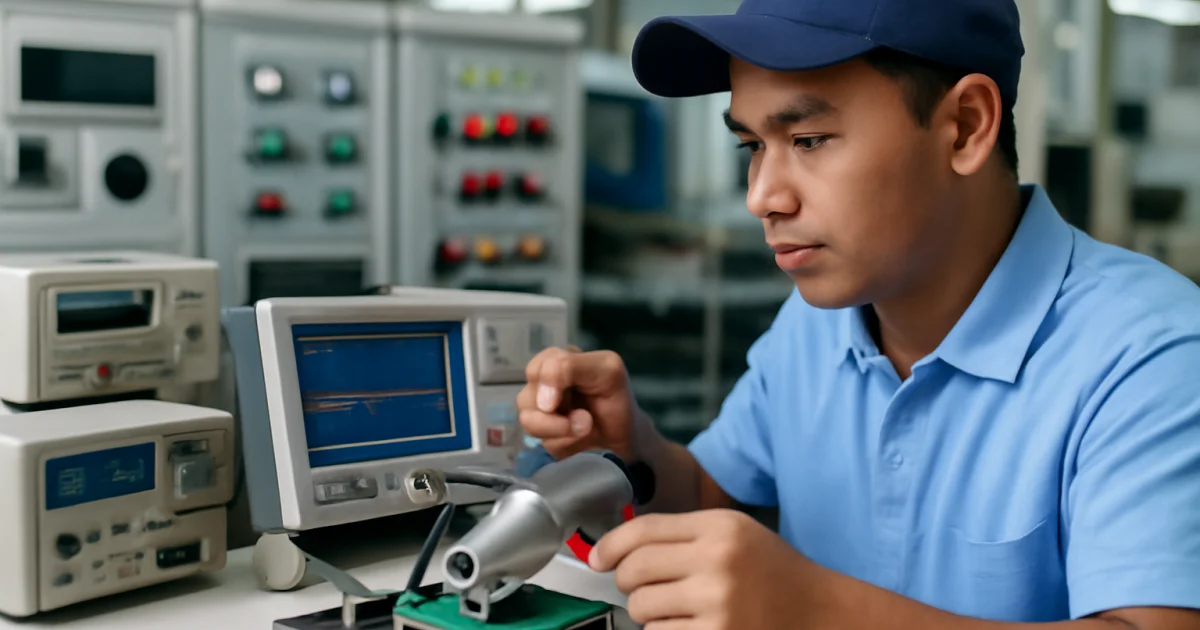
Functional testing has become a cornerstone in Malaysia’s rapidly growing precision manufacturing sector. As the demand for high-quality components in electronics, automotive, medical devices, and industrial machinery continues to rise, ensuring product reliability and performance through advanced functional testing is more critical than ever. This expert guide explores best practices, key challenges, and strategic insights for quality managers, R&D engineers, and technical leaders seeking to elevate their manufacturing outcomes in Malaysia.
Functional testing refers to the systematic process of verifying that a manufactured component or assembly operates according to its intended specifications under real-world conditions. Unlike dimensional or cosmetic inspections, functional tests simulate operational environments—electrical, mechanical, or thermal—to confirm performance, durability, and safety.
In Malaysia’s precision manufacturing landscape, functional testing is applied across a wide spectrum of products: electronic modules, injection-molded parts, sheet metal fabrications, and medical device assemblies. The complexity of modern designs—especially for semiconductor, automotive, and medical applications—means that functional testing is no longer optional but a necessity for both regulatory compliance and customer satisfaction.
Several testing methodologies are widely adopted in Malaysia’s advanced manufacturing facilities:
These functional testing technologies are often integrated into production lines, ensuring real-time feedback and rapid identification of quality issues before products reach final assembly or shipping.
Functional testing delivers several critical benefits for local and global manufacturers operating in Malaysia:
Manufacturers that invest in robust functional testing capabilities are better positioned to serve demanding sectors, including global electronics brands, automotive OEMs, and medical technology leaders.
To maximize the impact of functional testing in precision manufacturing, consider these proven strategies:
For companies seeking contract manufacturing support, choosing a partner with vertically integrated capabilities—including CNC machining, metal fabrication, injection molding, and advanced testing—simplifies the supply chain and reduces risk.
Despite its value, implementing effective functional testing in Malaysia’s manufacturing sector comes with challenges:
Proactively addressing these challenges ensures that functional testing remains a value driver rather than a bottleneck in the production process.
Functional testing is not limited to electronics. In Malaysia, it plays a vital role in:
By embedding functional testing throughout these processes, Malaysian manufacturers can deliver superior quality and meet the expectations of global clients across industries.
Functional testing is a strategic imperative for Malaysia’s precision manufacturing sector. As global clients expect higher reliability and compliance, the ability to demonstrate proven, documented test processes becomes a competitive advantage. By investing in the latest technologies, skilled teams, and integrated quality systems, manufacturers can ensure every component and assembly meets world-class standards.
If your organization is seeking to improve product reliability, accelerate innovation, or streamline quality assurance, partnering with experienced Malaysian contract manufacturers who prioritize advanced functional testing is the key to long-term success.
For more insights into how integrated testing and manufacturing capabilities deliver quality and efficiency, explore related topics such as surface finishing and functional testing or precision jigs and fixtures in Malaysia.
Functional testing verifies whether a component or assembly performs as intended under operational conditions. In precision manufacturing, it ensures that products such as electronics, automotive parts, and medical devices reliably meet design requirements and international standards, reducing risks of failure and costly recalls.
Industries such as electronics, automotive, medical devices, industrial equipment, and telecommunications benefit significantly. These sectors require high reliability, regulatory compliance, and consistent quality, all of which are supported by robust functional testing practices.
Automation increases test consistency, speed, and traceability. Automated test stations enable high-throughput verification for processes like injection molding and metal stamping, reduce human error, and provide real-time quality data for continuous improvement.
Yes, functional testing is often combined with dimensional inspections, visual checks, and environmental stress testing. Integrating these processes ensures comprehensive quality control and helps manufacturers deliver components that meet all customer and regulatory requirements.
Look for partners with vertically integrated capabilities, proven experience in your industry, modern testing equipment, and a track record of serving multinational clients. This ensures reliable results, efficient project management, and easier compliance with international standards.
Partner with Professional Tools & Dies Sdn. Bhd. for integrated contract manufacturing that combines precision CNC machining, injection molding, metal fabrication, and advanced functional testing. Our experience serving global industries ensures your products meet the highest standards for reliability, compliance, and performance. Discover how our one-stop solutions can streamline your supply chain and boost your manufacturing success in Malaysia and beyond.